YARN
Brand name
 BC GarnBC Garn 1
 Bertagna Filati by ArvierBertagna Filati by Arvier 5
 CardiffCardiff 4
 DropsDrops 18
 Fibre NatureFibre Nature 2
 GazzalGazzal 3
 HimalayasHimalayas 3
 SnowballSnowball 2
 KatiaKatia 13
 CreamCream 4
 Laines Du NordLaines Du Nord 7
 Lana GattoLana Gatto 6
 LopiLopi 1
 Madame Tricote ParisMadame Tricote Paris 1
 OpalOpal 2
 PhildarPhildar 8
 Rauma YarnRauma Yarn 6
 Rico DesignRico Design 4
 Silke by ArvierSilke by Arvier 5
 YarnArtYarnArt 3
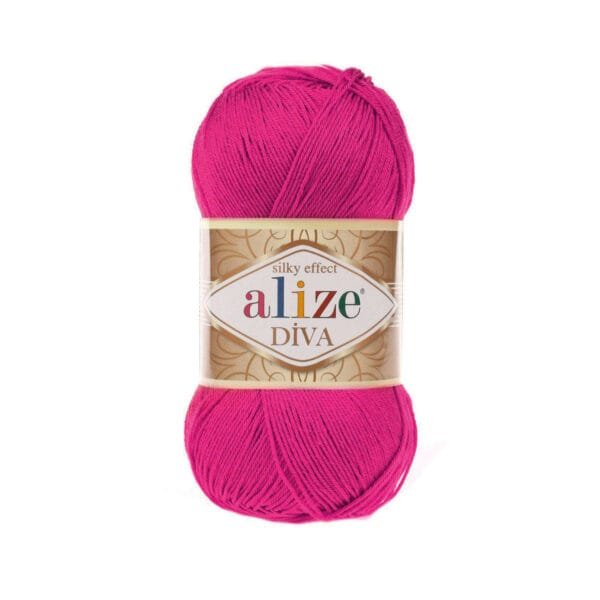
Alize DIVA (100% microfibre acrylic)
Original price was: 2,00 €.1,95 €Current price is: 1,95 €.| Fiber | 100% mikropluošto akrilas |
|---|---|
| Weight/length | 100g/350m |
| Recommended needles | 2.5-3.5 mm |
| Recommended crochet hook | 1-3 mm |
| Care | Galima skalbti skalbimo mašinoje (tausojančiu režimu iki 30 laipsnių), džiovinti patiesus. Nerekomenduojama lyginti labai karštu lygintuvu. |
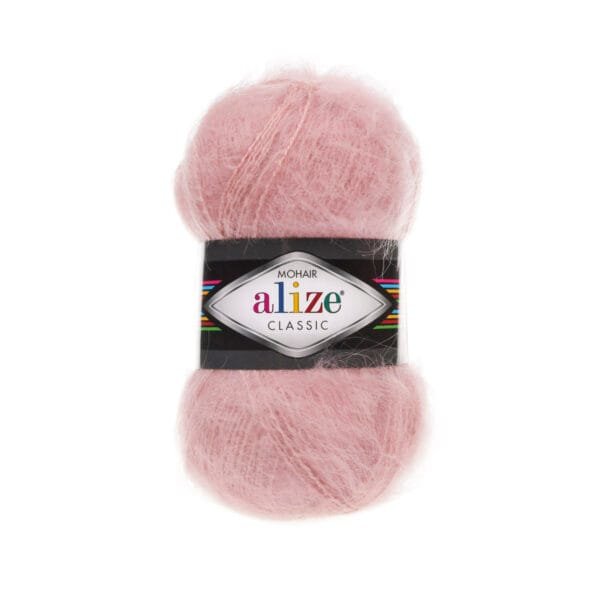
Alize MOHAIR CLASSIC (mohair, wool)
Original price was: 3,75 €.3,60 €Current price is: 3,60 €.| Fiber | 25% mohair, 24% wool, 51% acrylic |
|---|---|
| Weight/length | 100g/200m |
| Recommended needles | 5-7 mm |
| Care | Hand wash up to 30 degrees, do not bleach, iron with steam only, do not tumble dry. |
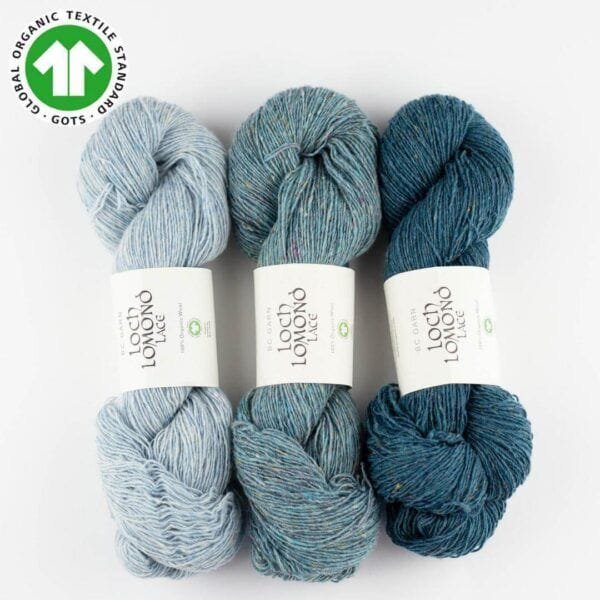
BC Garn LOCH LOMOND LACE GOTS (wool)
7,40 €| Fiber | 100% ekologiška vilna |
|---|---|
| Weight/length | 50g/300m |
| Type of yarn | Breathable, natural fibres |
| Recommended needles | 2-3 mm |
| Recommended crochet hook | 2.5-3.5 mm |
| Estimated consumption | M dydžio megztukui reikės apie 350 g. Jei derinti su mohera ar alpaka reikės apie 250-300 g |
| Care | Tik skalbimas rankomis iki 30 laipsnių su specialia skalbimo priemone. Negręžti, džiovinti patiesus. Idealu blokuoti. |
| Seasonality | Autumn-Winter Collection |
| Certificate | GOTS |
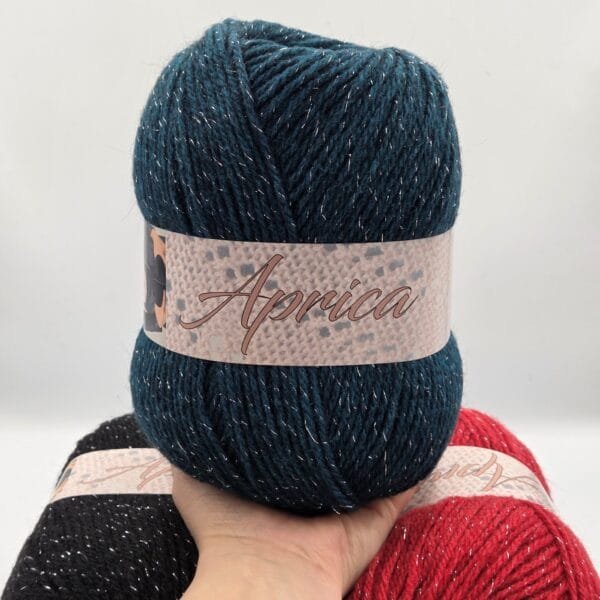
Bertagna Filati by Arvier APRICA (wool, alpaca wool)
8,90 €| Fiber | 25% alpakų vilna, 25% vilna, 47% akrilas, 3% poliesteris |
|---|---|
| Weight/length | 150g/360m |
| Recommended needles | 5.5-6 mm |
| Recommended crochet hook | 5-5.5 mm |
| Care | Wash at a maximum temperature of 30 degrees. Do not tumble dry, to maintain the shape of the knitwear, dry flat. |
| Seasonality | Spring-Summer Collection, Autumn-Winter Collection |

Bertagna Filati by Arvier ECOCASHMERE (cashmere, wool)
7,95 €| Fiber | 98% kašmyras, 2% vilna |
|---|---|
| Weight/length | 25g/75m |
| Recommended needles | 3.5–4 mm |
| Recommended crochet hook | 3.5–4 mm |
| Care | Hand washable up to 30 degrees Celsius. Dry flat. |
| Seasonality | Spring-Summer Collection, Autumn-Winter Collection |

Bertagna Filati by Arvier GIOIA BABY (100% merino wool)
4,90 €| Fiber | 100% merino wool |
|---|---|
| Weight/length | 50g/140m |
| Recommended needles | 3.5–4 mm |
| Recommended crochet hook | 3.5–4 mm |
| Care | Wash at a maximum temperature of 30 degrees. Do not tumble dry, to maintain the shape of the knitwear, dry flat. |
| Seasonality | Spring-Summer Collection, Autumn-Winter Collection |

Bertagna Filati by Arvier GRINTA (wool, alpaca wool, acrylic)
9,45 €| Fiber | 25% alpaku vilna, 20% vilna, 50% akrilas |
|---|---|
| Weight/length | 150g/220m |
| Recommended needles | 7-8 mm |
| Care | Wash at a maximum temperature of 30 degrees. Do not tumble dry, to maintain the shape of the knitwear, dry flat. |
| Seasonality | Autumn-Winter Collection |

Bertagna Filati by Arvier PRESTIGE (super baby alpaca, super fine merino, silk)
8,40 €| Fiber | 35% super baby alpaca, 35% super fine merino, 30% silk |
|---|---|
| Weight/length | 50g/100m |
| Recommended needles | 4-5 mm |
| Recommended crochet hook | 3.5–4 mm |
| Care | Hand wash up to 30 degrees, do not bleach, iron with steam only, do not tumble dry. |
| Seasonality | Spring-Summer Collection, Autumn-Winter Collection |
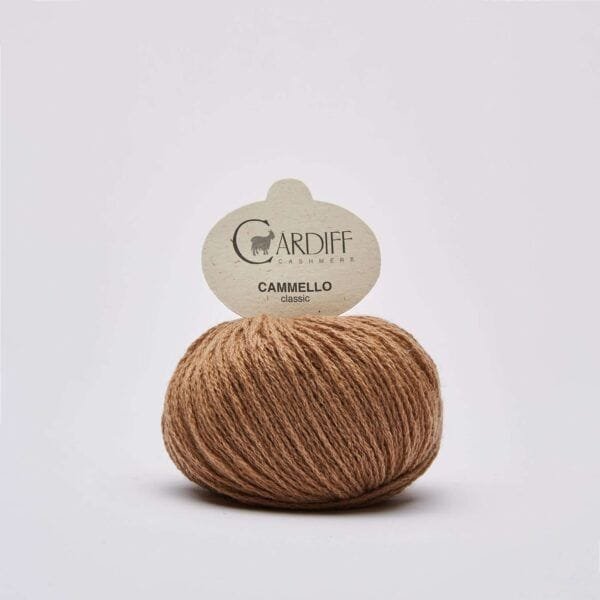
Cardiff CAMMELLO Classic (100% copper wool)
Original price was: 7,50 €.5,95 €Current price is: 5,95 €.| Fiber | 100% kupranugario vilna |
|---|---|
| Weight/length | 25g/112m |
| Type of yarn | Breathable, natural fibres |
| Recommended needles | 3.5-4.5 mm |
| Estimated consumption | For size S/M 10 balls, but the amount of yarn needed may vary depending on the pattern chosen, the size of the cords or the height of the person. |
| Care | Hand wash up to 30 degrees, do not bleach, iron with steam only, do not tumble dry. |
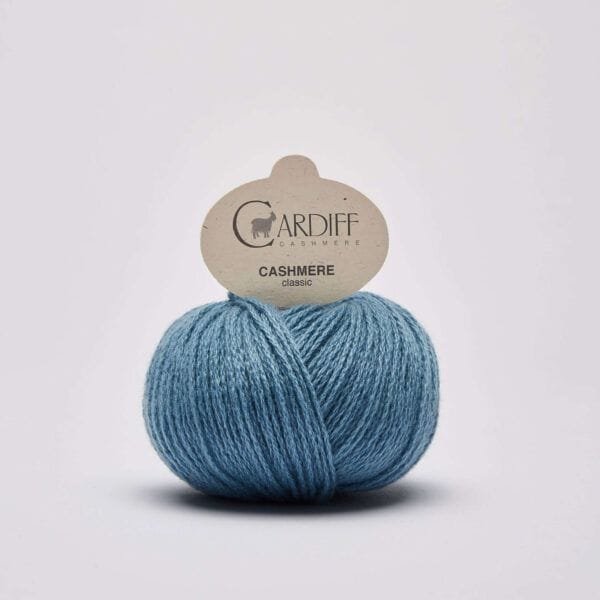
Cardiff Cashmere CLASSIC (100% cashmere)
Original price was: 13,50 €.12,50 €Current price is: 12,50 €.| Fiber | 100% cashmere |
|---|---|
| Weight/length | 25g/112m |
| Type of yarn | Breathable, natural fibres |
| Recommended needles | 3.5-4.5 mm |
| Estimated consumption | For size S/M 10 balls, but the amount of yarn needed may vary depending on the pattern chosen, the size of the cords or the height of the person. |
| Care | Gentle hand washing up to 30 degrees, steam ironing, flat drying and styling. |
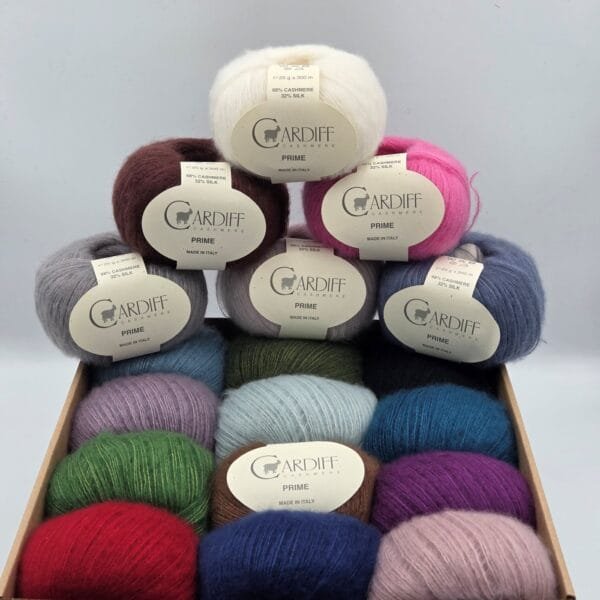
Cardiff Cashmere PRIME (cashmere, silk)
Original price was: 15,50 €.12,90 €Current price is: 12,90 €.| Fiber | 68% cashmere, 32% silk |
|---|---|
| Weight/length | 25g/300m |
| Type of yarn | Breathable, natural fibres, Luxury yarn |
| Recommended needles | 3-3.5 mm |
| Estimated consumption | For knitted button size M 125-150 g |
| Care | Gentle hand washing, towel dry, keep out of direct sunlight. |
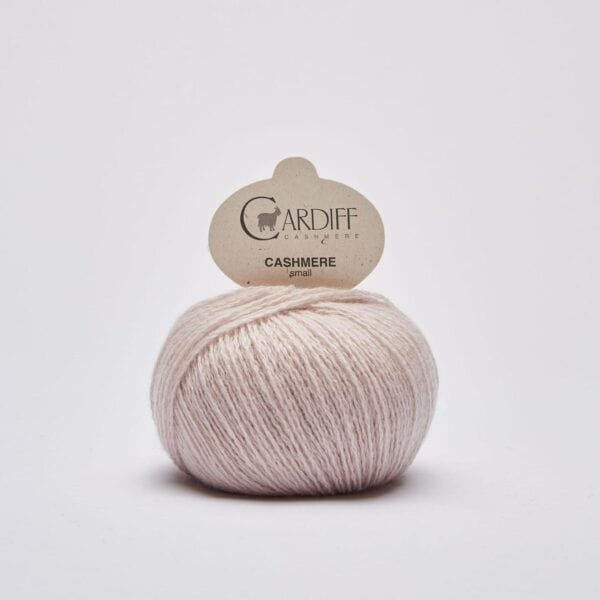
Cardiff CASHMERE Small (100% cashmere)
Original price was: 14,50 €.12,50 €Current price is: 12,50 €.| Fiber | 100% cashmere |
|---|---|
| Weight/length | 25g/170m |
| Type of yarn | Breathable, natural fibres |
| Recommended needles | 2.5-3 mm |
| Care | Gentle hand washing up to 30 degrees, steam ironing, flat drying and styling. |

Concept by Katia BABY CARE MERINO (100% merino wool)
Original price was: 34,60 €.28,80 €Current price is: 28,80 €.| Fiber | 100% merino wool |
|---|---|
| Weight/length | 250g/1100m |
| Type of yarn | Breathable, natural fibres |
| Recommended needles | 2.5-3 mm |
| Recommended crochet hook | 2-2.5 mm |
| Tank (10 x 10 cm) | 28 stitches x 35 rows |
| Care | Wash at a maximum temperature of 30 degrees. Do not tumble dry, to maintain the shape of the knitwear, dry flat. |
| Seasonality | Spring-Summer Collection, Autumn-Winter Collection, universal |
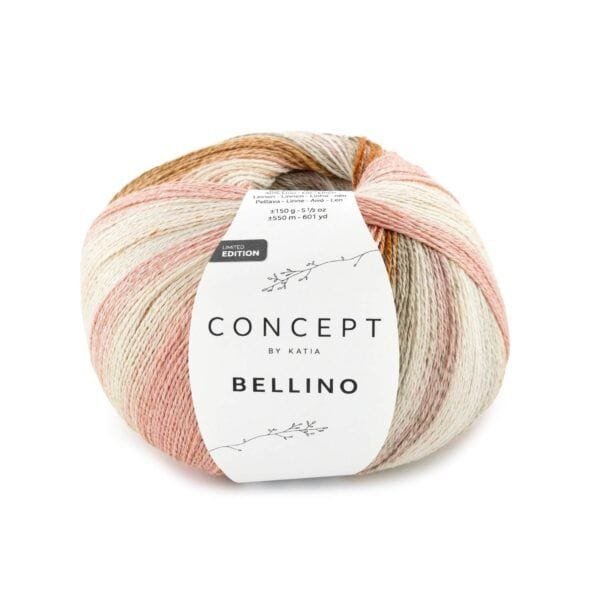
Concept by Katia BELLINO (cotton, linen)
Original price was: 23,50 €.21,45 €Current price is: 21,45 €.| Fiber | 60% medvilnė, 40% linas |
|---|---|
| Weight/length | 150g/550m |
| Type of yarn | Breathable, natural fibres |
| Recommended needles | 2.5-3.5 mm |
| Recommended crochet hook | 3-3.5 mm |
| Tank (10 x 10 cm) | 30 stitches x 28 rows |
| Estimated consumption | 2 balls for an S/M size top |
| Care | Hand wash up to 30 degrees, do not bleach, iron with steam only, do not tumble dry. |
| Seasonality | Spring-Summer Collection |
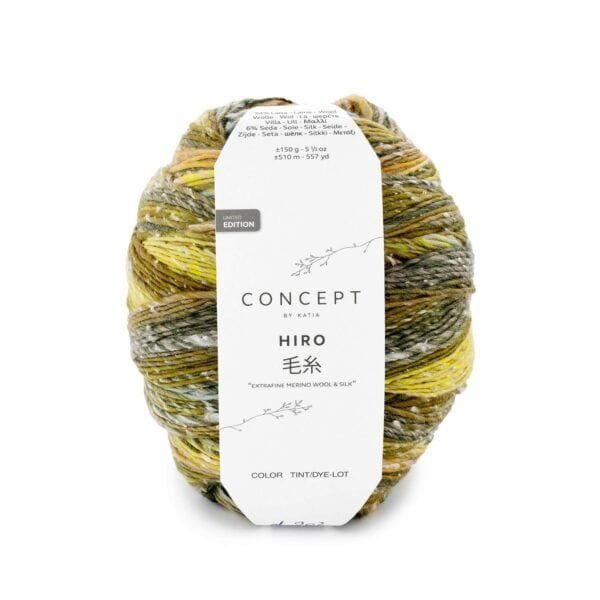
Concept by Katia HIRO (merino wool, silk)
Original price was: 27,95 €.24,45 €Current price is: 24,45 €.| Fiber | 94% merino extra fine, 6% silk |
|---|---|
| Weight/length | 150g/510m |
| Type of yarn | Breathable, natural fibres |
| Recommended needles | 3-3.5 mm |
| Recommended crochet hook | 3-3.5 mm |
| Tank (10 x 10 cm) | 24 meshes x 32 rows |
| Estimated consumption | One ball can be used to make a scarf, a shawl, a child's vest |
| Care | Hand washable up to 30 degrees Celsius. Dry flat. |
| Seasonality | universal |

Concept by Katia MERINO BABY (100% merino wool)
5,80 €| Fiber | 100% merino wool |
|---|---|
| Weight/length | 50g/165m |
| Type of yarn | Breathable, natural fibres |
| Recommended needles | 3-3.5 mm |
| Recommended crochet hook | 3-3.5 mm |
| Tank (10 x 10 cm) | 26 stitches x 32 rows |
| Care | Machine washable up to 30 degrees on a delicate wool/silk setting. Can be tumble dried or dried flat. |
| Seasonality | Spring-Summer Collection, Autumn-Winter Collection, universal |
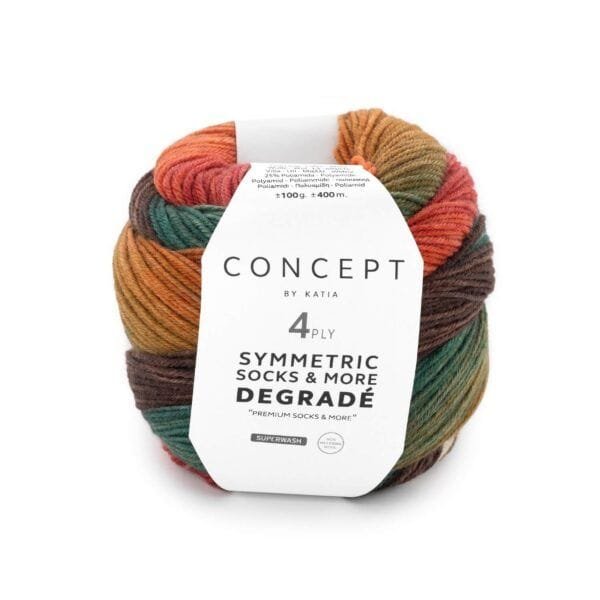
Katia Concept SYMMETRIC SOCKS & MORE-DEGRADÉ (wool, polyamide)
Original price was: 13,90 €.11,50 €Current price is: 11,50 €.| Fiber | 75% wool, 25% polyamide |
|---|---|
| Weight/length | 100g/400m |
| Recommended needles | 2.5-3 mm |
| Tank (10 x 10 cm) | 32 akys x 42 eilės |
| Care | Wash in the washing machine on a gentle cycle up to 40 degrees. Do not use fabric softener. Dry flat. Superwash treatment. |
| Estimated consumption | iš 1 kamuoliuko išeina pora kojinių iki 44 dydžio, kepurė, pirštinės, mova |
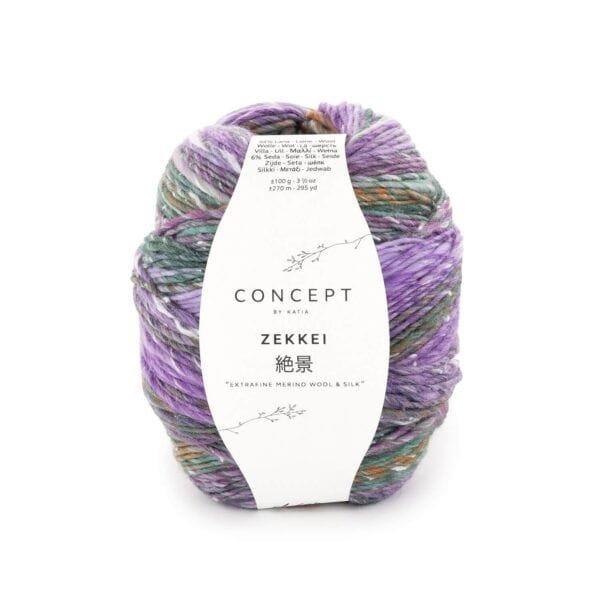
Concept by Katia ZEKKEI (merino wool, silk)
18,90 €| Fiber | 94% merino extra fine, 6% silk |
|---|---|
| Weight/length | 100g/270m |
| Type of yarn | Breathable, natural fibres |
| Recommended needles | 4-5 mm |
| Tank (10 x 10 cm) | 20 meshes x 25 rows |
| Care | Hand washable up to 30 degrees Celsius. Dry flat. |
| Seasonality | universal |
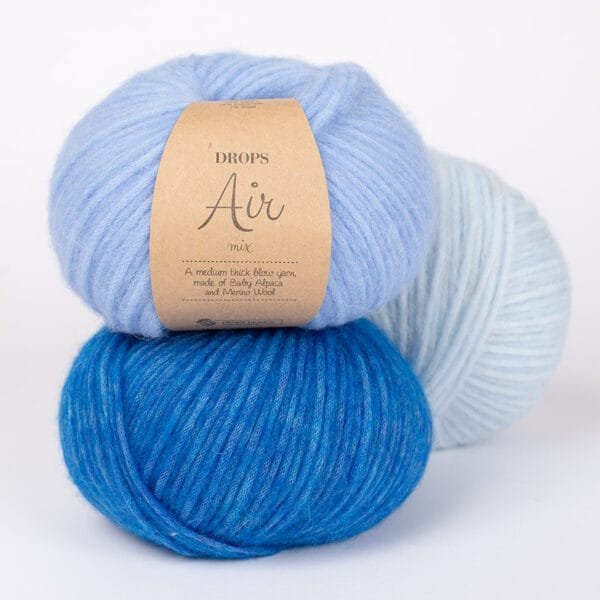
Drops AIR (Alpaca Wool)
Original price was: 5,20 €.3,65 €Current price is: 3,65 €.| Fiber | 65% alpaca wool, 28% polyamide, 7% wool |
|---|---|
| Weight/length | 50g/150m |
| Type of yarn | Medium-thickness thread |
| Recommended needles | 5 mm |
| Recommended crochet hook | 5 mm |
| Tank (10 x 10 cm) | 17 stitches x 22 rows |
| Estimated consumption | approx. 7-8 balls for jumper size M |
| Care | Hand washable up to 30 degrees Celsius. Dry flat. |
| Seasonality | Spring-Summer Collection, Autumn-Winter Collection |
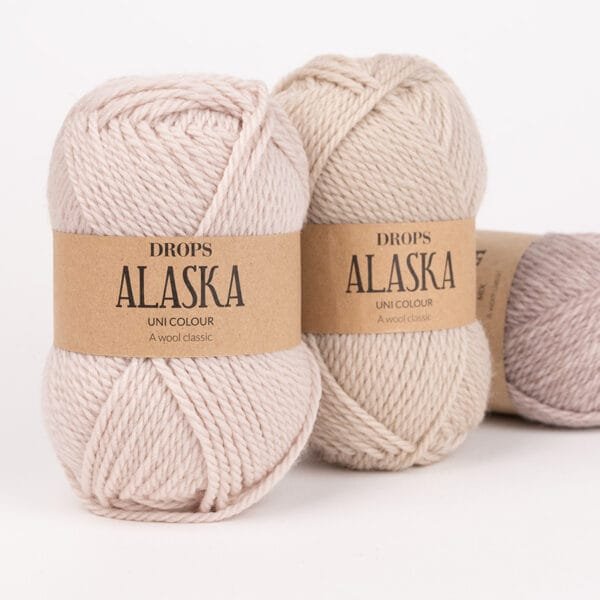
Drops ALASKA (100% vilna)
Original price was: 2,20 €.1,55 €Current price is: 1,55 €.| Fiber | 100% wool |
|---|---|
| Weight/length | 50g/70m |
| Recommended needles | 5 mm |
| Recommended crochet hook | 5 mm |
| Tank (10 x 10 cm) | 17 stitches x 22 rows |
| Care | Hand washable up to 30 degrees Celsius. Dry flat. |
| Certificate | Oeko-Tex Standard 100 |
Thread – an unnoticeable but essential part of textiles
Sometimes most valuable Things are those that we almost don't notice. Threads are exactly that. They are not the most prominent part of a garment, they are almost invisible, however, it is they who hold the entire product together. If even one thread unravels, the garment will quickly lose its shape, and sometimes become completely unfit to wear. Therefore, although threads may seem like just a thin strand, their significance in textiles is far greater than might be apparent at first glance. Without thread it is impossible to Sewing, and many textile products.
How did threads come about?
The history of thread began a very long time ago – back when people started sewing the first clothes from animal hides or simple fabrics. At that time, threads were made from whatever could be found in nature. This could be spun plant fibres, animal tendons or Vilnius. Of course, such threads were far from as durable as those of today. Nevertheless, they performed the most important function – they allowed materials to be joined. Later, spinning tools were developed which helped to twist fibres into stronger threads. After a few more centuries, mechanical looms began to be used, and the Industrial Revolution turned yarn production into a process of an entirely new scale. Today, screws are made using modernisations technologies. Because of this they can be very strong, of uniform thickness and tailored to specific tasks.
Weft yarn is made from cotton.
Threads can be made from various materials. Each has its own advantages, which is why different threads are used for different tasks. One of the most common choices – cotton yarn. They are natural, strong enough and quite versatile. Such threads are suitable for most everyday sewing tasks. A very common species – Polyester thread. They are characterised by high tensile strength and abrasion resistance. Because of this, they are often used for clothing that needs to be extremely durable. More advanced textile products are sometimes used silk thread. They are soft, have a subtle sheen, and are often chosen for decorative sewing or embroidery. There are also specialised threads – elastic, decorative, or even metallised. They are usually Used in creative projects.
Why is yarn quality important?
Not everyone thinks about it, but the quality of the thread can have a significant impact on the final result. Sometimes even good fabric can be ruined if the wrong threads are used. For example, very thick threads are not suitable for very thin fabric. In such cases, the seam can look coarse and sometimes even deform the fabric. Meanwhile, thick fabric requires stronger threads. If they are too weak, the seam will simply not withstand the load. For this reason, experienced tailors always try to choose threads that best suit a particular fabric.
Crafting thread
Threads are not only used for sewing clothes. They are also an important part of many crafts. Embroidery, knitting or crochet – these are just a few examples. In such crafts, threads often become the primary creative tool. Craft enthusiasts often choose colourful or decorative threads. Sometimes, threads of several colours are even used simultaneously to create more complex patterns. This allows threads to perform not only a practical but also an aesthetic function.
What to consider when choosing yarn
When choosing threads, it's worth considering several important things. Firstly – audio type. Different fabrics require different thread weights. Antra – Product purpose. If the garment is to be washed frequently or used intensively, it is better to choose more durable threads. It is also important to choose the right colour. Usually, threads are chosen to match the fabric colour as closely as possible, but sometimes a contrast is deliberately chosen. Threads may seem like a minor detail, but their significance in textiles is very great. It is precisely threads that allow fabrics to be joined together to create durable, functional, and aesthetically pleasing products. Whether we're talking about a professional tailor's shop, or a small crafting project at home, thread always remains one of the most important parts of the entire process. Sometimes it's precisely such small details that determine the final quality.