
Polyester





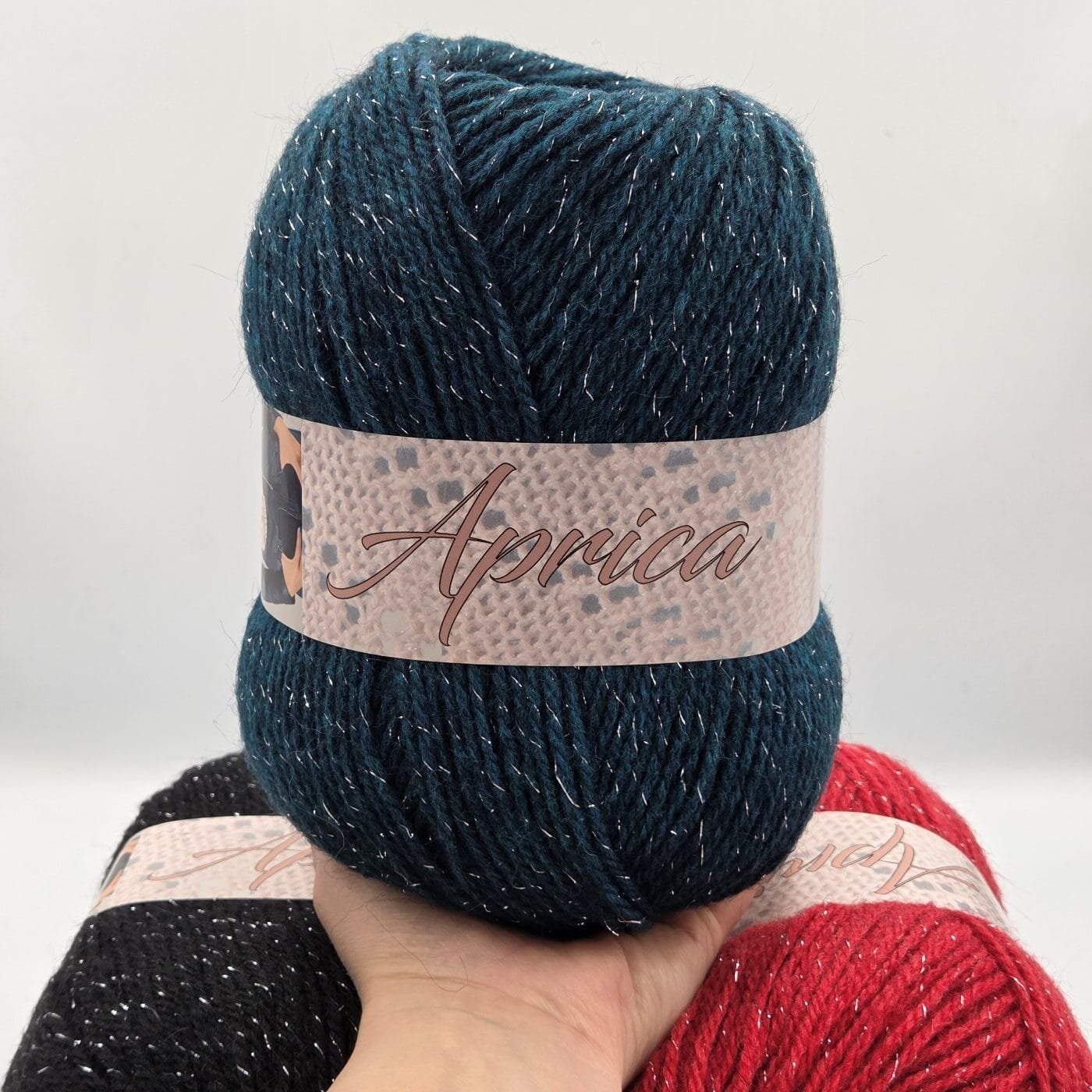
Bertagna Filati by Arvier APRICA (wool, alpaca wool)
8,90 €| Fiber | 25% alpaca wool, 25% wool, 47% acrylic, 3% polyester |
|---|---|
| Weight/length | 150g/360m |
| Recommended needles | 5.5-6 mm |
| Recommended crochet hook | 5-5.5 mm |
| Care | Wash at a maximum temperature of 30 degrees. Do not tumble dry, to maintain the shape of the knitwear, dry flat. |
| Seasonality | Spring-Summer Collection, Autumn-Winter Collection |
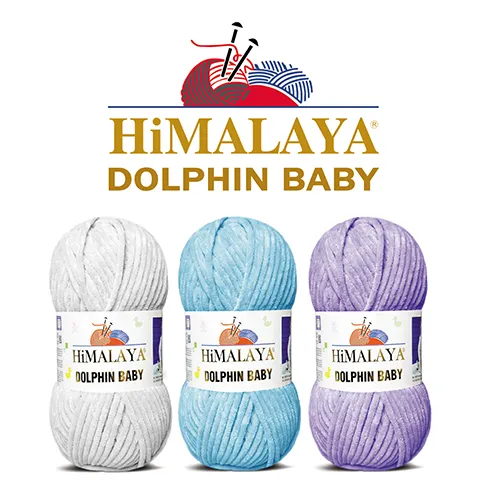
Himalaya Dolphin Baby (plush yarn)
Original price was: 3,45 €.2,95 €Current price is: 2,95 €.| Fiber | 100% micropolyester |
|---|---|
| Weight/length | 100g/120m |
| Type of yarn | Crochet thread |
| Recommended needles | 5.5-6.5 mm |
| Recommended crochet hook | 4.5-5 mm |
| Care | Gentle hand washing up to 30 degrees, steam ironing, flat drying and styling. |
| Seasonality | Spring-Summer Collection, universal |
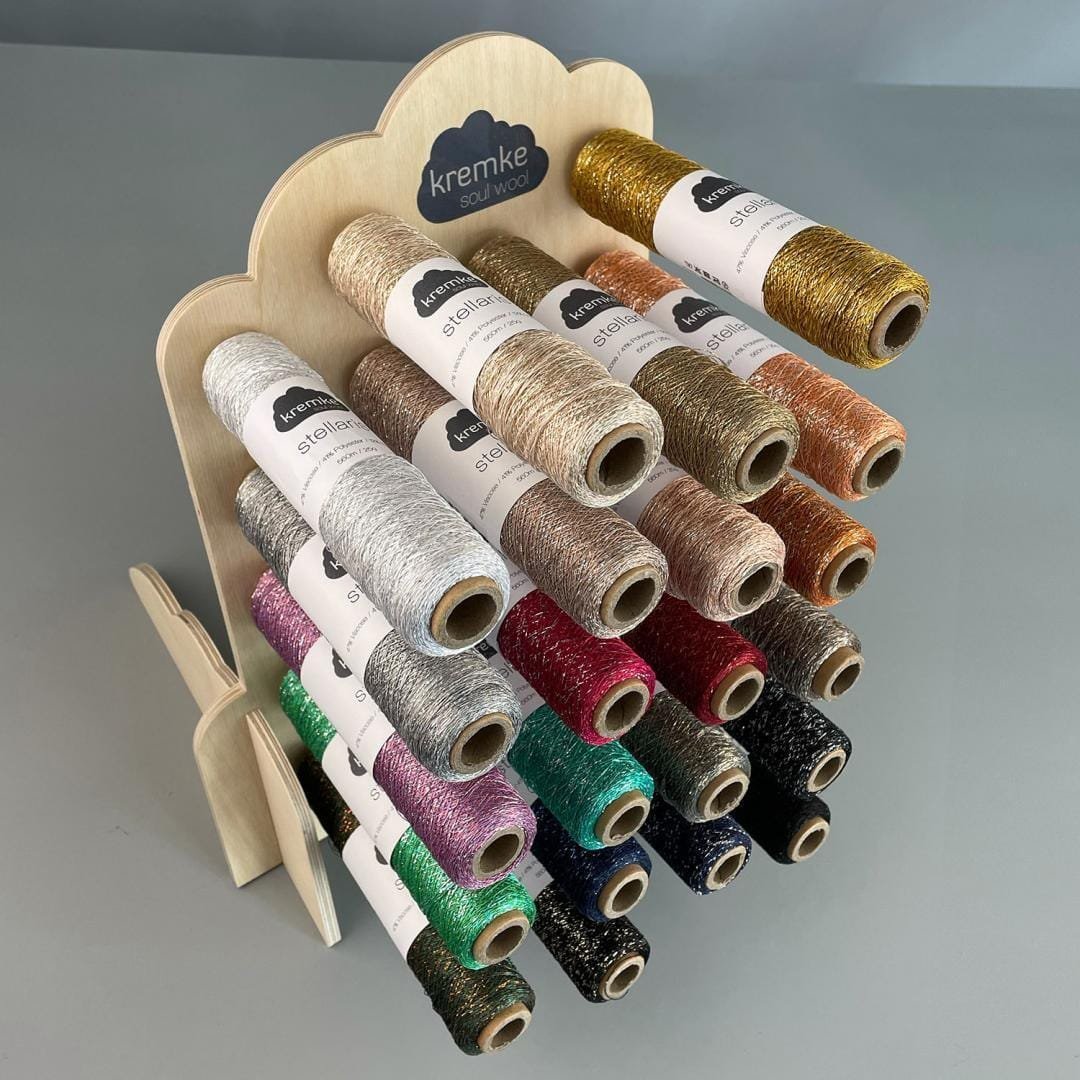
Kremke STELLARIS (viscose, metallised fibre)
8,40 €| Fiber | 47% viscose, 41% polyester, 12% metallised fibre |
|---|---|
| Weight/length | 25g/560m |
| Type of yarn | Strip, lightweight, glossy yarns |
| Care | Hand washable up to 30 degrees, not bleachable, ironable, not tumble dry. |
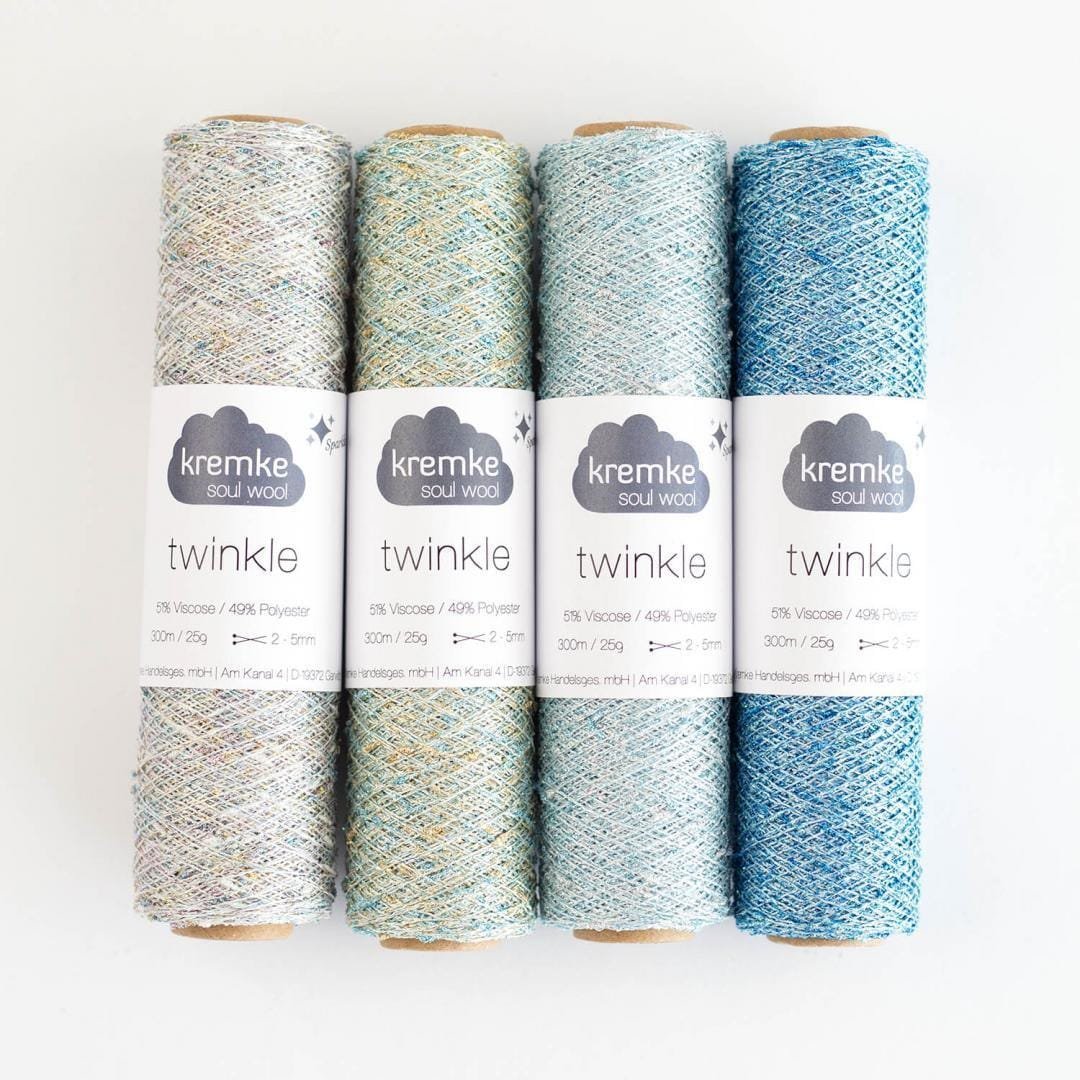
Cream TWINKLE (viscose)
9,40 €| Fiber | 51% viscose, 49% polyester |
|---|---|
| Weight/length | 25g/300m |
| Care | Machine washable up to 30 degrees on a delicate wool/silk setting. Can be tumble dried or dried flat. |
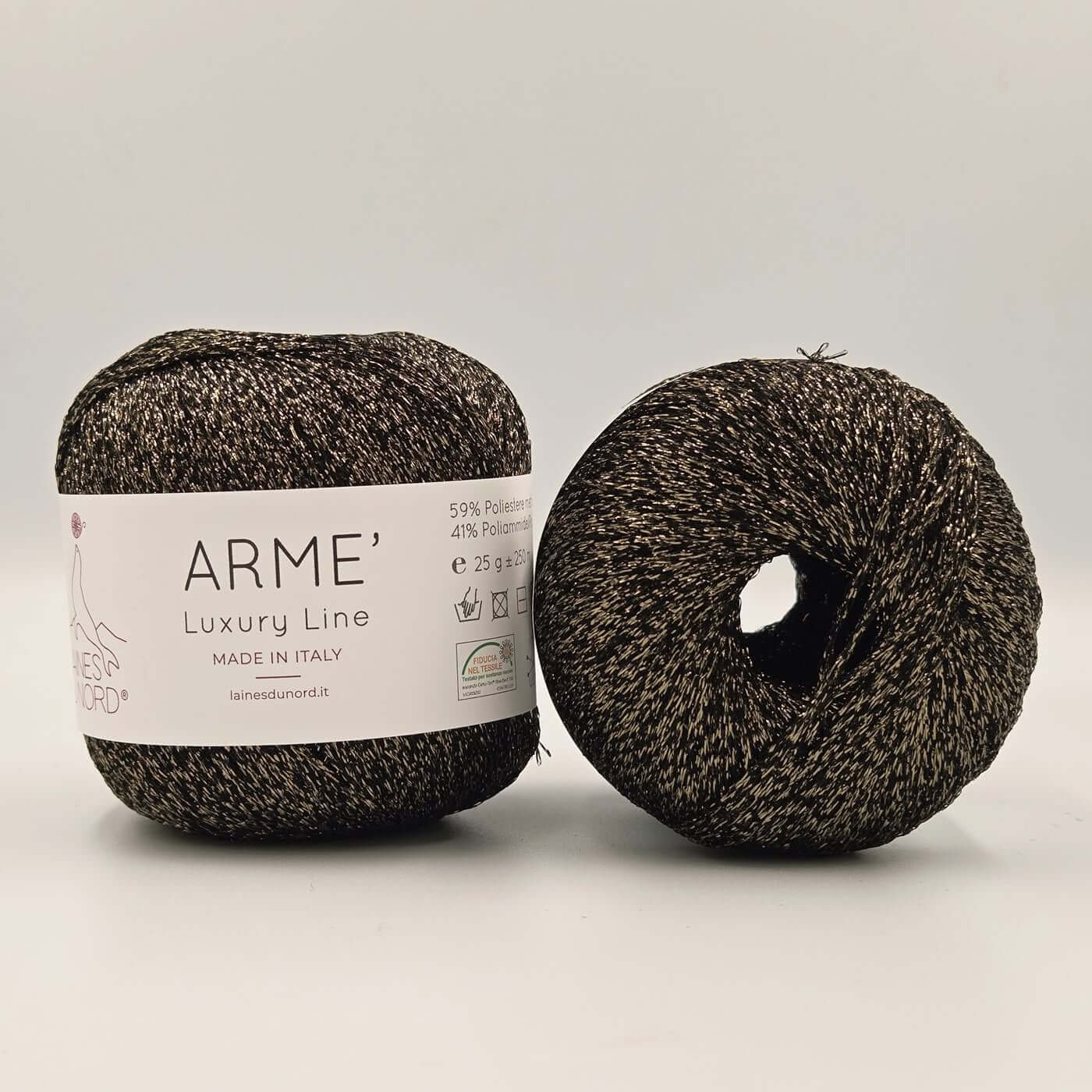
Laines Du Nord ARME glossy yarn (metallised polyester, polyamide)
3,40 €| Fiber | 59% metallic polyester, 41% polyamide |
|---|---|
| Weight/length | 25g/250m |
| Recommended needles | 2.5-3 mm |
| Care | Hand washable up to 30 degrees Celsius. Dry flat. |
| Seasonality | universal |
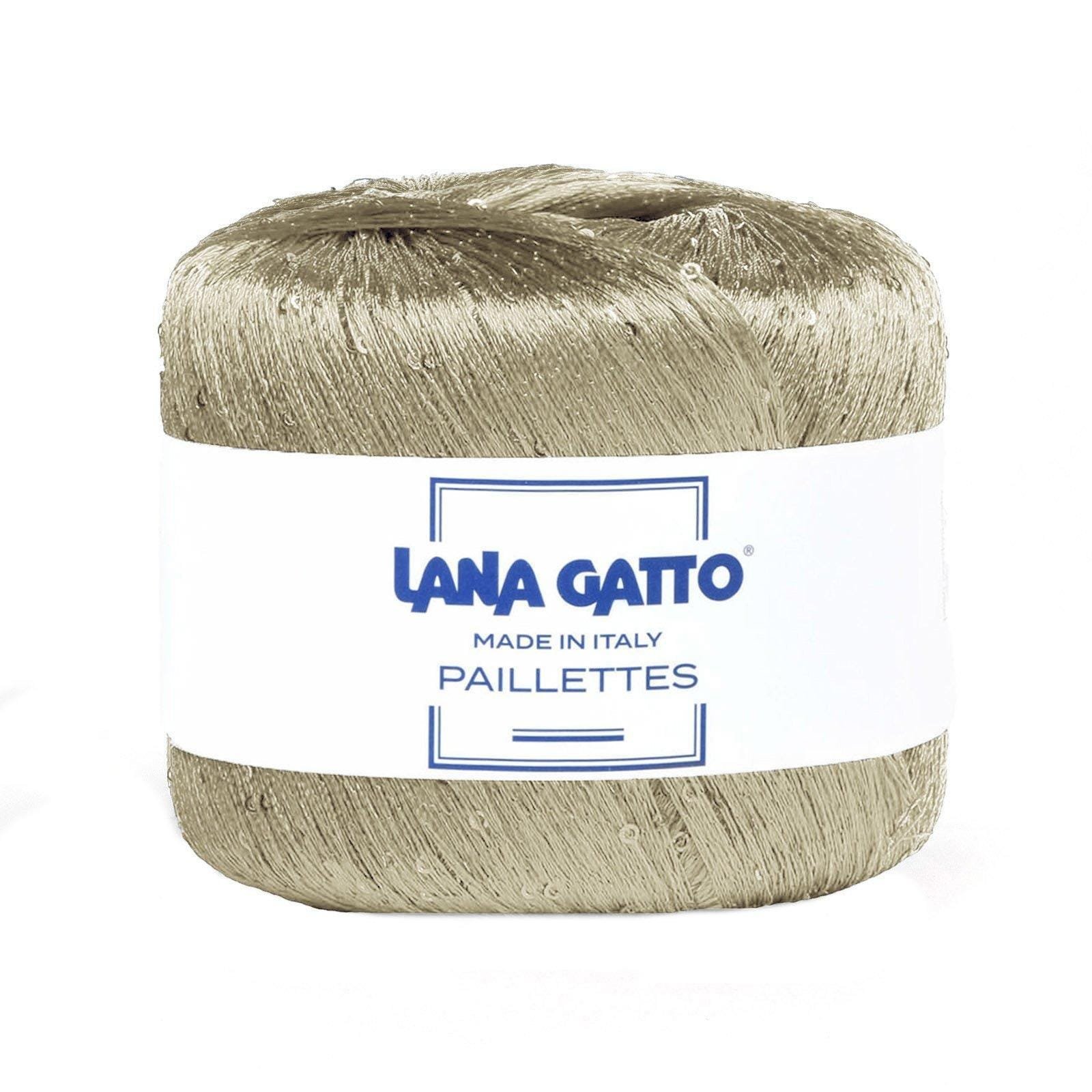
Lana Gatto PAILLETTES (100% polyester)
Original price was: 2,85 €.2,35 €Current price is: 2,35 €.| Fiber | 100% polyester |
|---|---|
| Weight/length | 25g/195m |
| Seasonality | universal |
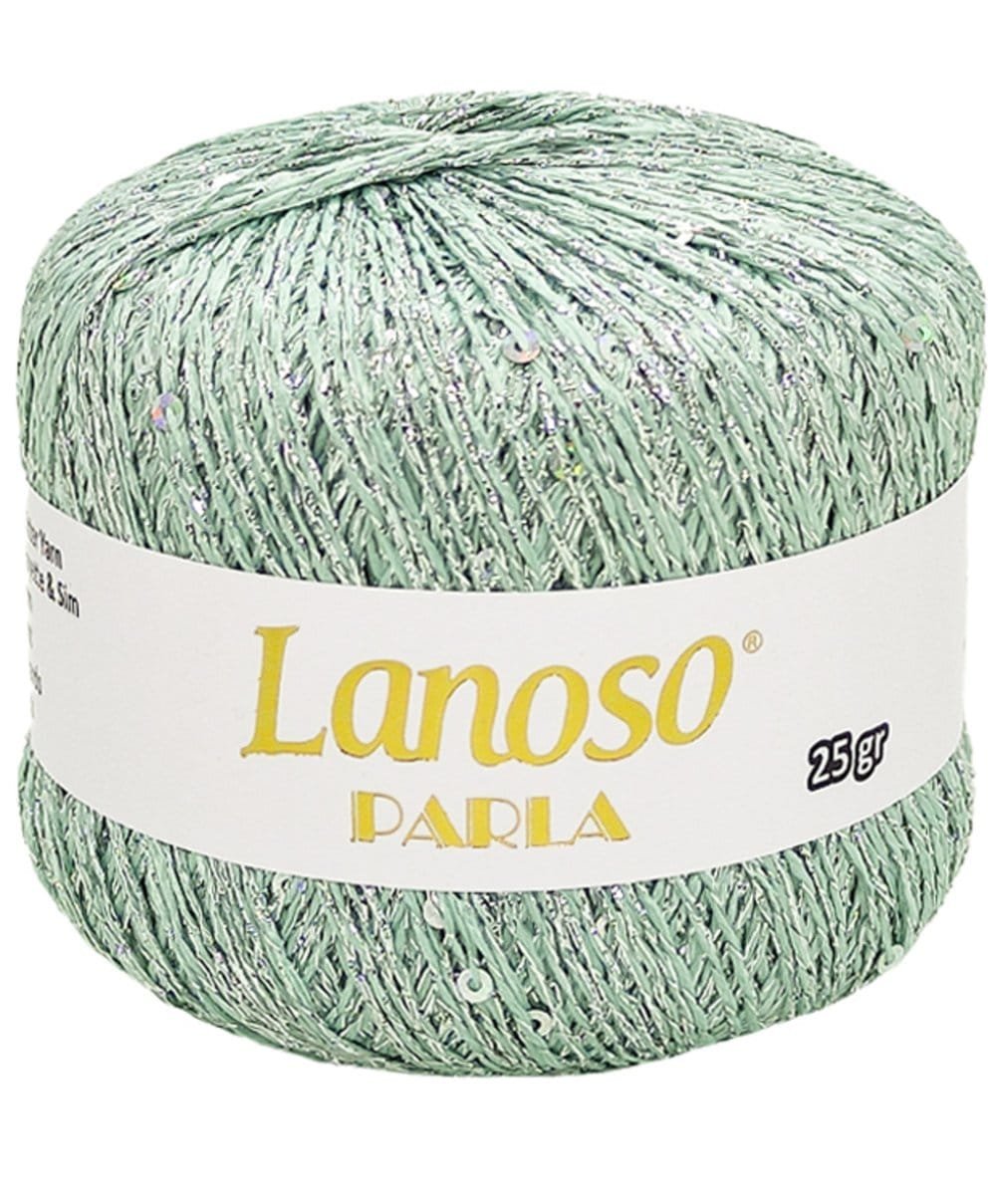
Lanos PARLA (chandelier, scales)
Original price was: 2,25 €.2,18 €Current price is: 2,18 €.| Fiber | 75% yarn with lurex, 25% scales |
|---|---|
| Weight/length | 25g/217m |
| Type of yarn | Strip, lightweight, glossy yarns |
| Recommended crochet hook | 2-3 mm |
| Recommended needles | 2-3 mm |
| Care | Hand wash up to 30 degrees, do not bleach, iron with steam only, do not tumble dry. |

Silke by Arvier DELIZIA (soft lurex, polyester)
3,50 €| Fiber | 43% soft lurex, 57% polyester |
|---|---|
| Weight/length | 50g/165m |
| Recommended needles | 3.5–4 mm |
| Recommended crochet hook | 3-3.5 mm |
| Care | Hand wash up to 30 degrees, do not bleach, iron with steam only, do not tumble dry. |
| Seasonality | universal |
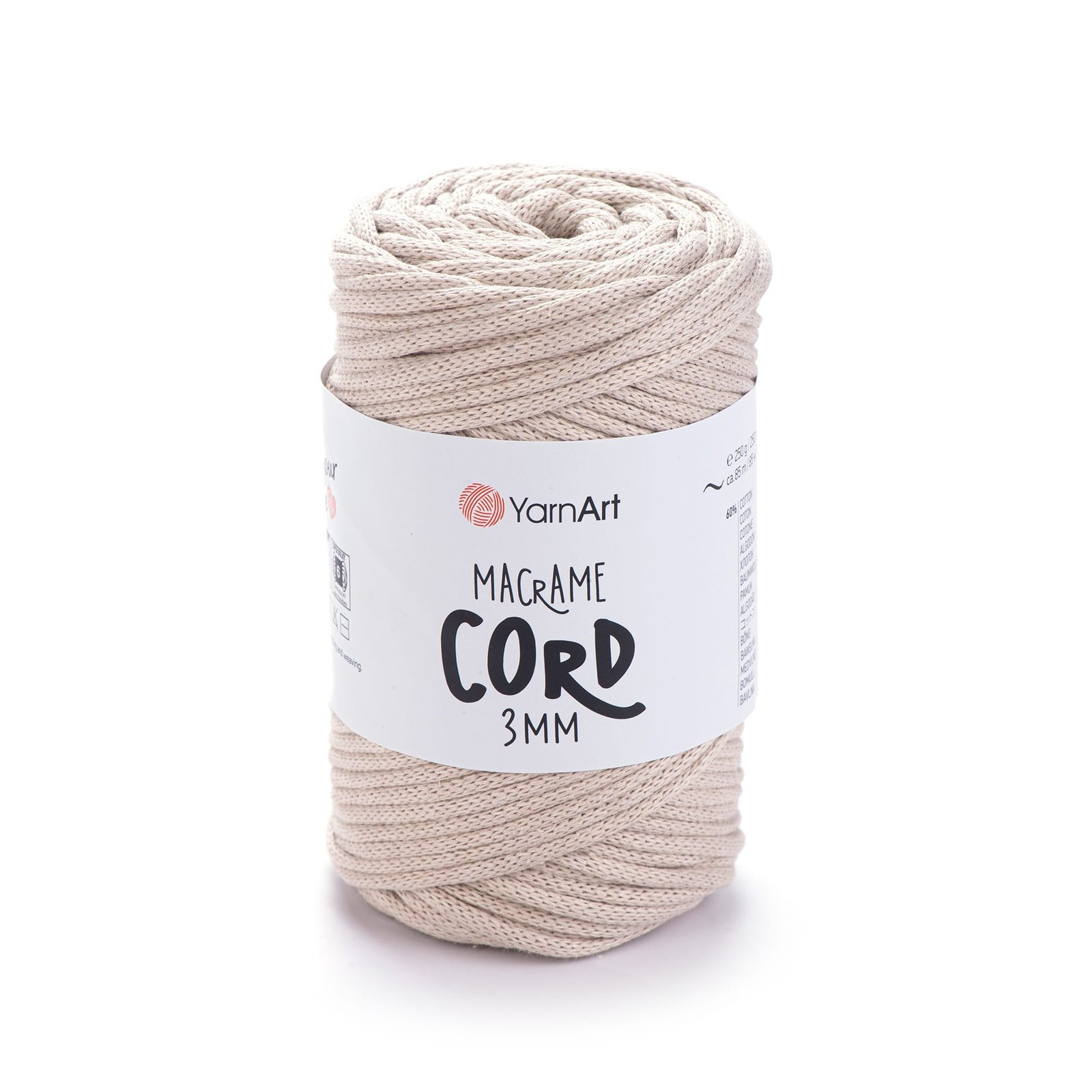
YarnArt MACRAME CORD 3 MM (cotton, viscose)
Original price was: 3,60 €.3,40 €Current price is: 3,40 €.| Fiber | 60% cotton, 40% viscose and polyester |
|---|---|
| Weight/length | 250g/85m |
| Type of yarn | Crochet cord |
| Recommended crochet hook | 7-8 mm |
| Care | Gentle hand washing, towel dry, keep out of direct sunlight. |
| Seasonality | Spring-Summer Collection, universal |
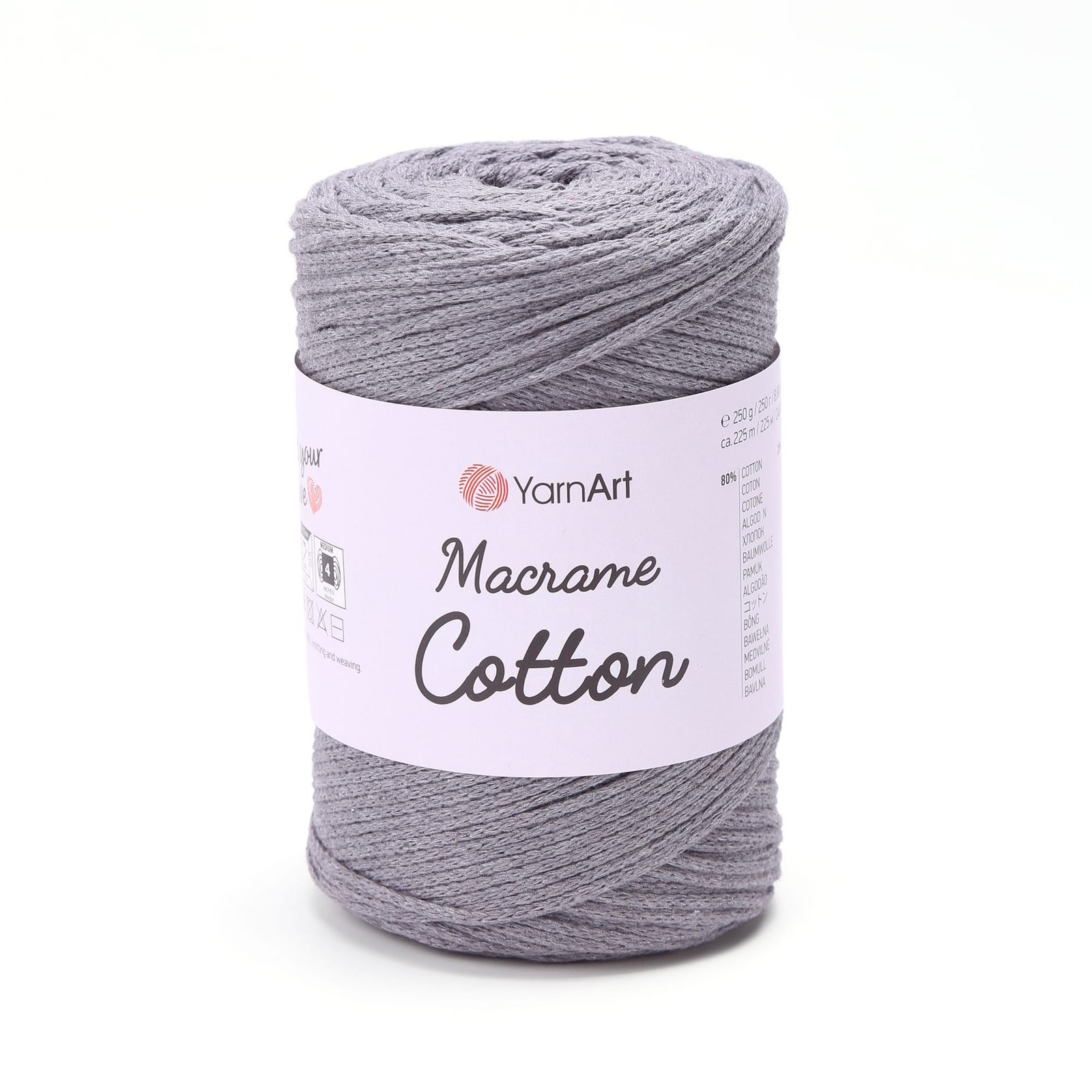
YarnArt MACRAME COTTON (cotton)
Original price was: 3,50 €.3,38 €Current price is: 3,38 €.| Fiber | 80% cotton, 20% polyester |
|---|---|
| Weight/length | 250g/225m |
| Type of yarn | Crochet cord |
| Recommended crochet hook | 4-5 mm |
| Recommended needles | 5 mm |
| Care | Hand wash up to 30 degrees, do not bleach, iron with steam only, do not tumble dry. |
Polyester yarns - durability and stability in modern needlework
Handicraft makers often experiment with different thread, because each fibre has its own characteristics. Some yarns are soft, others are warm, and still others are strong. It is the latter that are often classified as Polyester yarn, which have been used in textiles for quite some time. Polyester is a synthetic fibre developed to produce a strong and stable yarn. Although it is not of natural origin, Polyester yarns are valued for their strength and durability. For this reason, they are quite often used not only in needlework but also in at in textiles.
What is polyester fibre?
Polyester is a fibre that produced by special synthetic polymers. This fibre has been developed to produce yarns that resist wear and tear and keep their shape. One of the first things that stands out when working with Polyester thread, is their stability. They often retain their structure and are not very prone to deformation. In addition, polyester is often relatively lightweight, so knits can be comfortable even with thicker yarns.
Why is polyester often used in yarn blends?
Many yarns containing polyester can be found in needlework shops used at in combination with other fibres. This is done to combine different properties. Polyester yarns are often blended with wool, cotton or acrylic, to make the yarn stronger and more resistant to everyday use. For example, blends of wool and polyester can add warmth to knitted fabrics while increasing their durability. Such yarns are often used for projects that need to be durable.
Projects where polyester pays off
Due to its characteristics Polyester yarn are often used for projects that are designed for more intensive use.
They can be used to create:
- sports accessories
- hats
- scarves
- bags
- various decorative elements
Some needleworkers also use polyester for home textiles, as these knits can be quite resistant.
Resistance and shape
One of the main advantages of polyester is its resistance to deformation. Polyester yarns often help knitted fabrics keep their shape for longer, even if they are used frequently. This is particularly useful for garments or accessories that are subjected to higher loads. In addition, polyester does not generally shrink as strongly as some other materials.
How does polyester behave when knitting?
When working with different yarns, you can see that each fibre has a different feel. Polyester yarns usually slip quite easily, so the knitting process can be smooth. Some knitters find that this characteristic can make knitting go quite quickly. However, it is sometimes a good idea to choose the right size of bobbin to make the yarn easier to control.
Colour retention
Colour stability is another characteristic for which polyester is often used in textiles. Polyester yarns often keep their colour for a long time, even if the knitwear is washed quite often. This is important for projects that are used every day. Bright colours can remain quite intense even after a longer time.
Convenience of maintenance
As far as maintenance is concerned, polyester is considered to be a fairly practical fibre. Polyester yarns are generally low maintenance, so the knitted fabrics can easily be used every day. In most cases, a gentle wash at a medium temperature is sufficient. This is one of the reasons why polyester is often used for clothing and accessories.
Why is polyester still used in textiles?
While natural fibres are often considered classic in needlework, synthetic fibres also play an important role. Polyester yarns give the knits strength and stability, which is why they are often used in mixtures with other yarns. Such combinations make it possible to create yarns that are both comfortable and durable. Needlework allows you to choose from many different fibres. Each has its own distinct advantages.
Polyester yarns are characterised by their strength, stability and easy maintenance. They can be used for a wide range of projects, from accessories to home textiles. Sometimes, it is these yarns that help to create knitwear that not only looks neat but also lasts for a long time.